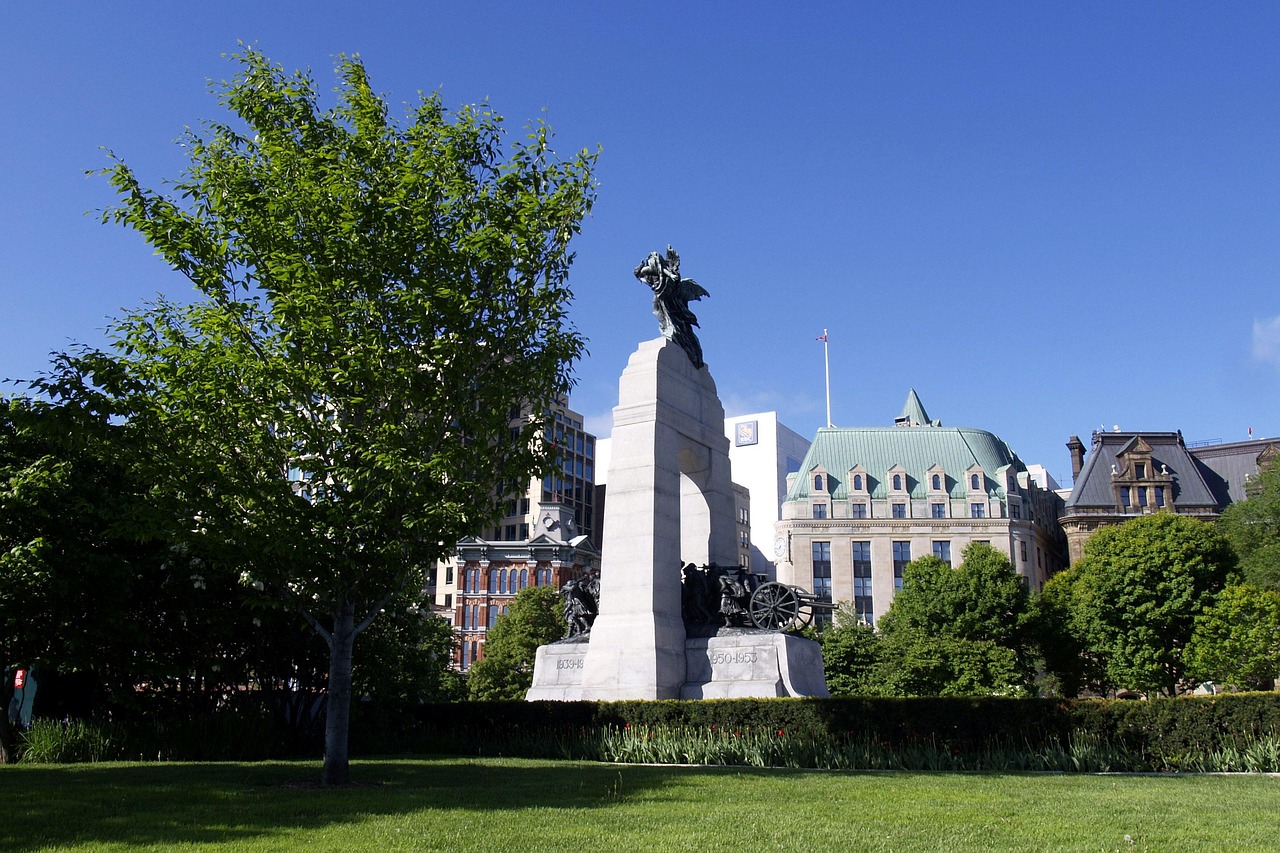
Ottawa is often unfairly labeled as a “quiet government town,” but those who live here know better. It is a city of world-firsts, massive underground bunkers, and a tech hub that rivals Silicon Valley. Whether you are a local or a curious traveler, these facts about Ottawa — updated for 2026, reveal the true DNA of Canada’s capital.
Ottawa at a Glance: 2026 Fast Facts
| Category | Data |
| Metro Population (2026) | ~1,480,000 (Growing at ~1% annually) |
| Official Languages | English & French (Officially Bilingual) |
| Nickname | Silicon Valley North / Bytown |
| Land Area | 2,788 sq. km (Larger than Toronto, Montreal, Vancouver, and Calgary combined) |
| UNESCO Sites | The Rideau Canal |
Part 1: The Origins – From Rough Trade to Royal Choice
Before it was a sea of suits and Parliament Hill, Ottawa was a rugged, lawless lumber town known as Bytown.
- The Algonquin Roots: The name “Ottawa” is derived from the Algonquin word adawe, which means “to trade.” The area has been a meeting place for Indigenous peoples for millennia.
- The “Bytown” Era: Founded in 1826 as Bytown, the city was named after Colonel John By, the engineer who oversaw the construction of the Rideau Canal.
- Queen Victoria’s Strategic Choice: In 1857, Queen Victoria was asked to choose a permanent capital. She chose Ottawa because it was centrally located between the warring political factions of Quebec and Ontario, and its inland location made it easier to defend from American attacks.
- The “Lumber Capital”: In the mid-19th century, Ottawa was the center of the world’s timber trade. The Ottawa River was often so full of logs you could theoretically walk across it.
- The Great Fire of 1900: A massive fire destroyed a third of Ottawa and much of Hull (Gatineau), leaving 14,000 people homeless in just a few hours.
- The Parliament Fire of 1916: A small fire in the reading room of Centre Block grew into a disaster. The only part of the original building saved was the Library of Parliament—legend says a quick-thinking librarian slammed the iron doors shut just in time.
- The 200th Anniversary (2026): This year marks exactly 200 years since the founding of Bytown. The city has allocated over $1.9 million for bicentennial celebrations and the revitalization of the historic ByWard Market.
Part 2: Geography & The “Green” Capital
Ottawa isn’t just a city; it’s a massive expanse of wilderness and urban planning.
- The Three Rivers: Ottawa sits at the confluence of three major rivers: the Ottawa, the Rideau, and the Gatineau.
- The Greenbelt: Surrounding the urban core is a 20,000-hectare “Greenbelt”—the largest publicly owned greenbelt in the world. It was designed in the 1950s to prevent urban sprawl.
- The Mer Bleue Bog: Located within the city limits, this 3,500-hectare bog is a 12,000-year-old ecosystem that looks more like the Arctic tundra than Southern Ontario.
- Coldest Capital Ranking: Ottawa is consistently ranked as the 7th coldest capital city in the world (behind Ulaanbaatar, Astana, Moscow, Helsinki, Reykjavik, and Tallinn).
- The World’s Largest Rink: Every winter, the Rideau Canal transforms into the Skateway. It stretches 7.8 kilometers and is equivalent to 90 Olympic-sized hockey rinks.
- Vast Borders: Because of a massive 2001 amalgamation, the City of Ottawa’s borders include significant rural farmland. In fact, 90% of Ottawa’s land mass is rural.
New for Jan 2026: Check out our Complete Rideau Canal Skateway Guide for current opening status and rest area maps.
Part 3: Silicon Valley North – The 2026 Tech Powerhouse
While the government is the largest employer, the tech sector is the city’s economic engine.
- High-Tech Concentration: Ottawa has the highest concentration of tech talent in North America, with tech workers making up over 13.3% of the workforce as of 2025/2026.
- Kanata North: This neighborhood is officially designated a “Special Economic District.” It hosts over 540 companies and contributes over $13 billion to Canada’s GDP annually.
- The 5G Hub: 90% of all industrial telecommunications R&D in Canada happens in Ottawa.
- Most Educated City: Ottawa has more PhDs per capita than any other city in Canada.
- Autonomous Vehicle Testing: Ottawa was the first Canadian city to launch a testing ground for integrated autonomous vehicles on public city streets.
- Shopify’s Home: One of the world’s largest e-commerce platforms, Shopify, was founded right here in a coffee shop in the ByWard Market.
Read our 2026: Deep-Dive on Silicon Valley North to see how Ottawa’s tech scene is outperforming the US.
Part 4: Hidden Gems & “Weird” Facts
- The Diefenbunker: Located in Carp, this is a massive four-story underground bunker built during the Cold War to house the government in case of a nuclear attack. It is now a museum and houses the world’s deepest escape room.
- The Ghostly Hostel: The HI Ottawa Jail Hostel was once the Carleton County Gaol. Guests can actually sleep in the old stone cells, and it is widely considered one of the most haunted buildings in North America.
- The “Royal” Tulips: Every year, the Netherlands sends 10,000 tulip bulbs to Ottawa. This tradition started after Canada sheltered Princess Juliana and her family during WWII and helped liberate the Netherlands.
- The Abandoned “Prince of Wales” Bridge: Now officially the Chief William Commanda Bridge, it was a derelict rail bridge for decades before being converted into a stunning interprovincial pedestrian and cycling crossing.
- A Multi-Billion Dollar Makeover: As of January 2026, the city is undergoing massive infrastructure shifts, including a $5.2 billion operating budget focused heavily on the Phase 2 and Phase 3 expansion of the O-Train light rail system.
Did you know Ottawa has an underground city? Read our Deep-Dive on the Diefenbunker to learn about the Bank of Canada gold vault.
Part 5: The Culinary Capital – Beyond the BeaverTail
Ottawa’s food scene is defined by its multiculturalism and its proximity to the fertile farmland of the Ottawa Valley.
- The Birth of the BeaverTail: In 1978, Grant and Elizabeth Hooker sold the first BeaverTail (fried dough in the shape of a beaver’s tail) at the Killaloe Craft and Community Fair. Their first permanent stand opened in the ByWard Market in 1980.
- “Ottawa-Style” Pizza: If you order pizza here, expect a unique style: a thick, doughy crust, toppings hidden underneath a massive layer of spicy, local mozzarella, and a heavy hand with the sauce. Fans of Colonnade Pizza or Louis’ Pizza swear by it.
- Shawarma Capital of the World? Per capita, Ottawa has more shawarma shops than almost any city outside the Middle East. It is widely considered the city’s unofficial late-night snack.
- The 1846 Market: The ByWard Market is one of Canada’s oldest and largest public markets. It was established by Lt-Col. John By to provide a commercial hub for the canal builders.
- The “Money Tree”: In the ByWard Market, you’ll find a bronze sculpture of a tree. It’s a local tradition for tourists to try and lodge coins into the bark for good luck.
- Craft Beer Explosion: As of 2026, the Ottawa region boasts over 40 craft breweries. The “Bayview/Hintonburg” corridor is often called the “Beer Mile” due to the density of local taps.
Part 6: Neighborhood Deep-Dives – A City of Villages
Ottawa is a “city of neighborhoods,” each with a distinct personality that predates the 2001 amalgamation.
- The Glebe: Known for its Victorian architecture and the “Lansdowne Park” redevelopment. It was originally a “glebe”—land set aside for the clergy of St. Andrew’s Presbyterian Church.
- Rockcliffe Park: One of the wealthiest neighborhoods in Canada. It is its own independent village (technically a “Park”) and is home to dozens of world embassies and the Prime Minister’s official residence (24 Sussex Drive).
- Hintonburg: Once a blue-collar industrial area, it is now the “Brooklyn of Ottawa,” famous for its arts scene, independent boutiques, and “Parkdale Market.”
- Vanier: One of the few remaining francophone enclaves in the city core. It is home to the Muséoparc Vanier, which features the only urban sugar shack in the world.
- The Golden Triangle: A sub-neighborhood of Centretown, so named because it is shaped like a triangle bounded by Elgin Street and the Rideau Canal.
- Kanata’s High-Tech Origins: Before it was a suburb, Kanata was a “planned community” started by Bill Teron in the 1960s, designed to mix nature with modern living.
Part 7: Sports, Spirit, and Superstition
- The “Silver Seven”: Before the modern Senators, the Ottawa Silver Seven (1903–1906) were a hockey dynasty, winning the Stanley Cup and once famously kicking the trophy into the frozen Rideau Canal after a night of celebrating.
- Lansdowne’s Curse: For decades, sports teams at Lansdowne Park (the Rough Riders and the Renegades) struggled with financial issues, leading to local legends about a “stadium curse” that was finally broken by the Ottawa REDBLACKS winning the Grey Cup in 2016.
- The Grey Cup History: Ottawa has hosted the Grey Cup seven times, with the most recent massive celebration occurring at the renovated TD Place Stadium.
- The Panda Game: An annual football rivalry between the University of Ottawa Gee-Gees and the Carleton University Ravens. It is one of the biggest university sporting events in Canada, known for its “Pedro the Panda” mascot.
Part 8: Science, Arts, and Education
- The National Arts Centre (NAC): Built as a “Centennial project” to celebrate Canada’s 100th birthday in 1967, it is a rare example of Brutalist architecture that is actually beloved by the city.
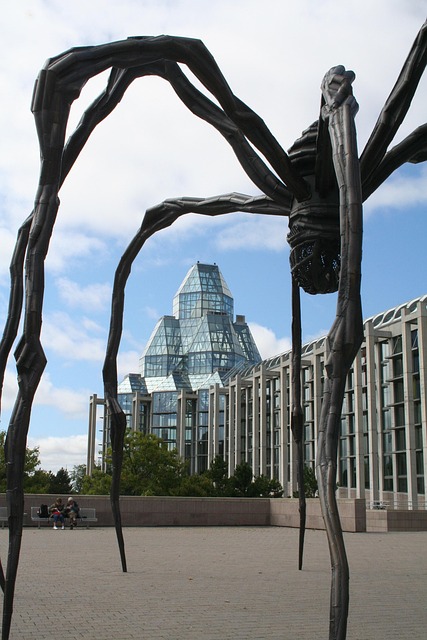
- The “Spider” Sculpture: Outside the National Gallery of Canada sits Maman, a 30-foot-tall bronze spider. It contains 26 white marble eggs inside its abdomen.
- Canadian Museum of Nature: The building (the Victoria Memorial Museum Building) actually started sinking shortly after construction in 1912 because it was built on “Leda clay.” The heavy central tower had to be removed to stop the descent.
- Royal Canadian Mint: While most of Canada’s “pocket change” is made in Winnipeg, the Ottawa Mint produces all of the country’s collector coins and gold bullion. It’s also where the gold medals for the 2010 Vancouver Olympics were made.
- Bilingualism as a Fact: Approximately 37% of Ottawa residents can speak both English and French fluently, making it the most bilingual major city in Ontario.
Part 9: Ottawa by the Numbers – 2026 Statistics
- Population Milestone: As of January 2026, the Ottawa-Gatineau metropolitan area has reached an estimated 1,480,000 residents, maintaining its position as the 4th largest metro area in Canada.
- The $5 Billion City: The City of Ottawa’s 2026 draft budget is one of its most ambitious, focusing on a multi-billion dollar investment in housing and transit infrastructure.
- Land of Parks: Ottawa maintains over 800 kilometers of multi-use pathways, making it one of the most bike-friendly capitals in the world.
- Bilingual Strength: Approximately 40% of the population is conversationally bilingual (English and French), the highest percentage among Canada’s six largest cities.
- The Tech Payoff: The average tech salary in Ottawa has climbed to over $105,000 CAD in 2026, fueled by the concentration of SaaS and cybersecurity firms in Kanata.
Part 10: Ottawa 2026 – The Bicentennial & Beyond
- Bytown 200: 2026 marks the 200th anniversary of the founding of Bytown. Major celebrations are centered around the “Ottawa 2026” cultural program, including a special bicentennial day at Ottawa Bluesfest.
- LeBreton Flats Revival: After decades of sitting empty, the LeBreton Flats project is finally coming to life in 2026 with new residential towers and the ongoing development of the new NHL arena district.
- LRT Phase 2 Progress: By the end of 2026, the O-Train expansion is set to further connect the edges of the city (Orléans and Riverside South), making the city more interconnected than ever.
- Sustainability Goals: Ottawa is currently on track with its “Energy Evolution” strategy, aiming to reduce community-wide greenhouse gas emissions by 100% by 2050, with several 2026 milestones for electric bus fleet adoption.
Planning a trip? Don’t miss the Official 2026 Ottawa Festival Calendar for exact dates and lineup rumors.
Part 11: Frequently Asked Questions (FAQ)
Is Ottawa the coldest capital in the world?
No, but it’s close. Ottawa is the 7th coldest capital city in the world. The title usually goes to Ulaanbaatar, Mongolia.
What is Ottawa’s main industry?
The two largest sectors are Public Administration (Federal Government) and High-Tech. Ottawa is known as “Silicon Valley North” because it has the highest concentration of tech talent in North America.
When was Ottawa founded?
Ottawa was founded as Bytown in 1826 and was later incorporated as the City of Ottawa in 1855.
What is the most famous landmark in Ottawa?
Parliament Hill is the most famous, but the Rideau Canal (a UNESCO World Heritage Site) is a close second, especially in winter.